
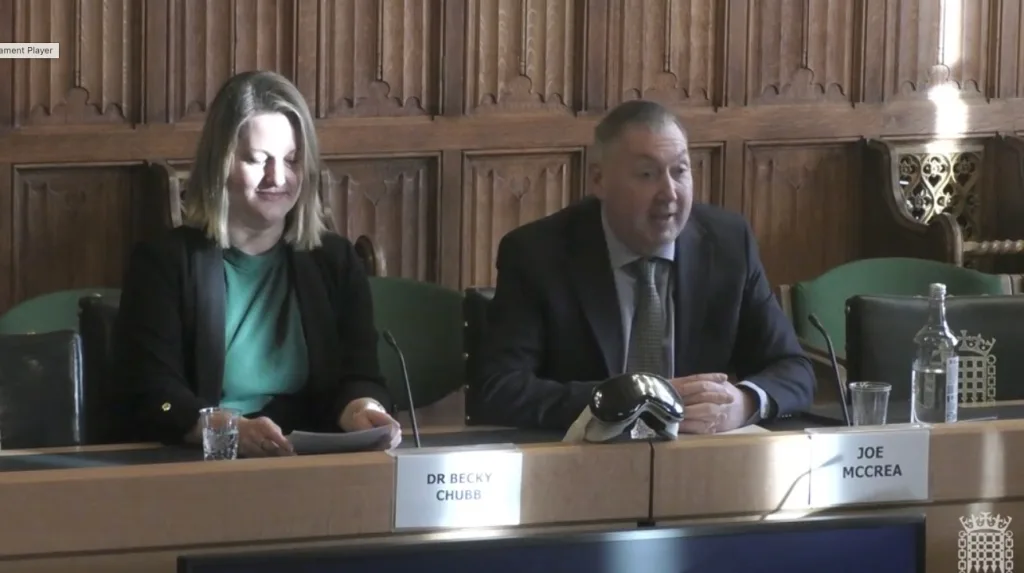
Joe McCrea, Associate Director of Communications, and Dr Becky Chubb, Deputy Clinical Director, appeared before the Science, Innovation and Technology Committee in Parliament on Tuesday 2 December. Together, they showcased two examples of innovation delivered by North Staffordshire Combined Healthcare NHS Trust – combining clinical science with the latest developments in innovation and technology.
The two projects showcased at the committee sit within the Trust’s Combined Virtual Reality (CVR) programme: virtual reality delirium training and virtual reality service walkthroughs.
Virtual reality delirium training
To mark World Delirium Awareness Day 2022, the Trust created virtual reality delirium training – a training film for frontline staff such as those in A&E and on acute wards who may care for people with dementia but are not dementia specialists.
Often the early signs of delirium are missed, and distressed behaviour can be misinterpreted as being difficult or challenging. This can lead to less compassionate care, simply through misunderstanding.
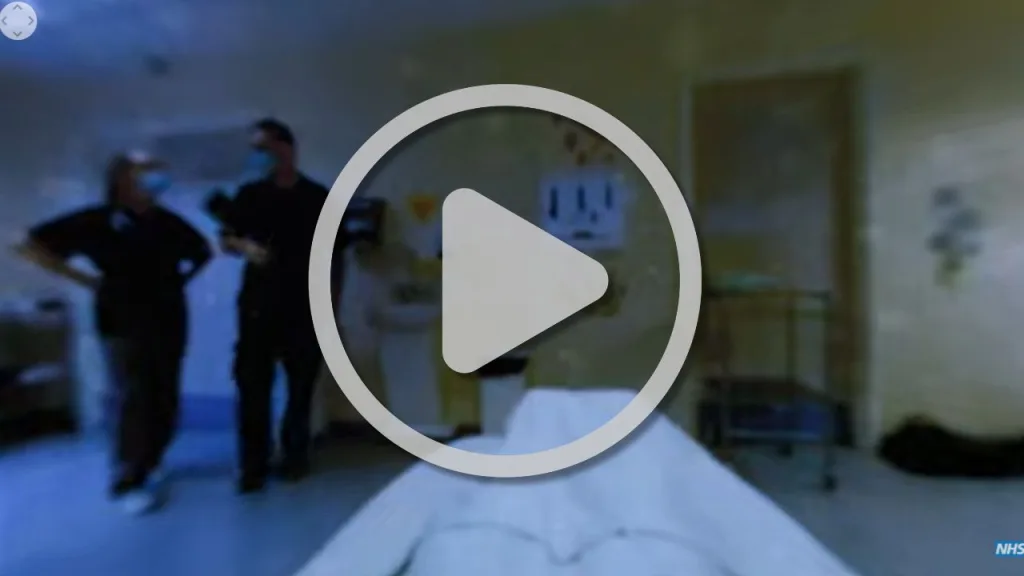
The film – which takes four minutes to experience – places the viewer inside the experience of a patient with delirium. You see what she sees, hear her internal thoughts, and witness the impact when staff miss essential needs such as glasses, a hearing aid, or respond inappropriately as she tries to get out of bed. Eventually, a compassionate nurse recognises her distress and responds appropriately.
The film is freely available via the Trust’s YouTube channel and has received over 130,000 views. In 2024 it became international with a Danish language version in partnership with Gødstrup Hospital in Denmark. A Welsh language version created for Health Education and Innovation Wales also launches early next year.
Watch the delirium training video below:
Virtual reality service walkthroughs
Patients and families can feel significant anxiety before coming to a mental health hospital, due to negative stereotypes far from the reality of modern, compassionate care environments.
To help combat this, the Trust created virtual walkthroughs, which are available on the Trust website, and accessible both online and through a virtual reality headset, showing the real spaces where care is provided.
In the below video, we meet Barry and his daughter, Sarah. Before she agreed to her Dad being admitted to Ward 4, Sarah was able to use our 360 degree virtual walkthrough of Ward 4 to see the facilities and allay any concerns or preconceptions she may have had about what a mental health facility looks like:
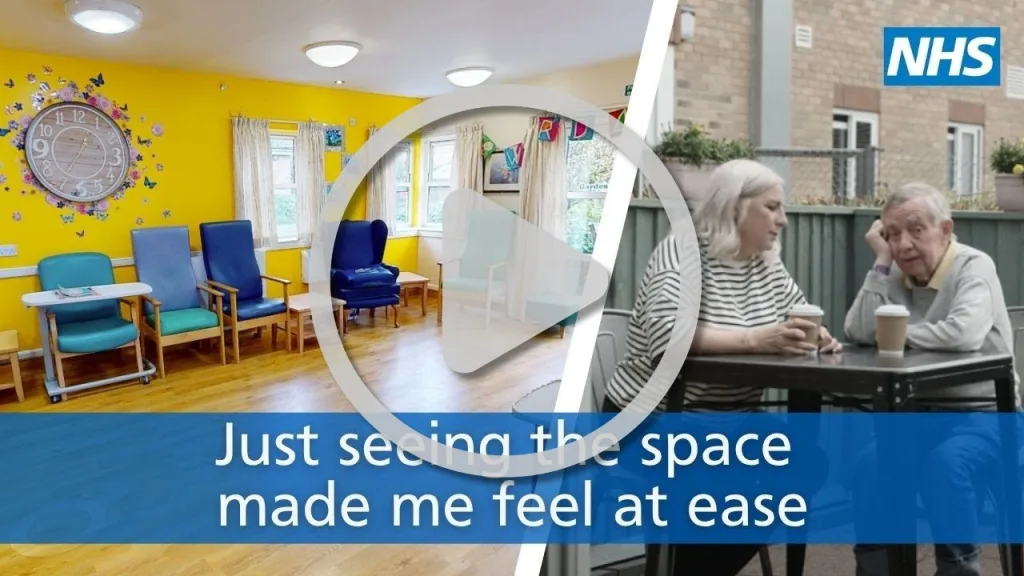
Since launch, over 3,700 people have viewed walkthroughs, and the Trust has had over 37,000 web impressions, demonstrating clear value to service users and families.
In addition to these two examples of how the Trust is adopting virtual reality (VR), and increasingly artificial intelligence (AI), life-sized immersive training environments are also being developed using animated digital avatars on floor-to-ceiling screens in a new digital production facility.
As part of the committee visit, the Trust was asked what government, industry or other stakeholders could do to support innovation.
The Trust has advised on three points:
- The Department of Health could encourage all NHS Trusts to promote on World Delirium Awareness Day 2026 (11th March) the availability of VR delirium training for frontline staff.
- The department could also recommend that all NHS Trusts provide virtual walkthroughs of their facilities.
- A clinically led research programme could explore how VR, combined with AI-driven cognitive environments, could support people living with dementia and memory impairment.
You can watch the session before the committee on Parliament TV here.